How to Finance an Insurance Agency Acquisition This Year
Three ways buyers finance an insurance agency acquisition in 2026: SBA 7(a) loans, commission-based lenders, and seller notes. Compare the terms and fit.
Most insurance agency acquisitions get financed three ways: an SBA 7(a) loan, a commission-based lender that underwrites renewal income, or a seller note that bridges the gap. SBA fits first-time buyers with thin collateral, commission lenders fit cash-flow deals, and seller notes align both sides on price.
TL;DR
- Buyers fund an agency purchase three ways: an SBA 7(a) loan, a commission-based (cash-flow) lender, or a seller note. Most real deals blend two of the three.
- SBA 7(a) fits first-time buyers with limited collateral. Commission-based lenders underwrite your renewal book, not your house. Seller notes bridge the price gap and keep the seller invested in a clean handoff.
- The right structure is the one your cash flow can service after debt, not the one with the lowest rate on paper.
Most insurance agency acquisitions get financed three ways, and the winning buyer picks the structure their post-close cash flow can actually carry. Those three routes are an SBA-backed bank loan, a commission-based lender that underwrites your renewal income, and a seller note carried by the person selling you the book. Here is how each one works and when it fits.
What are the three main ways to finance an insurance agency acquisition?
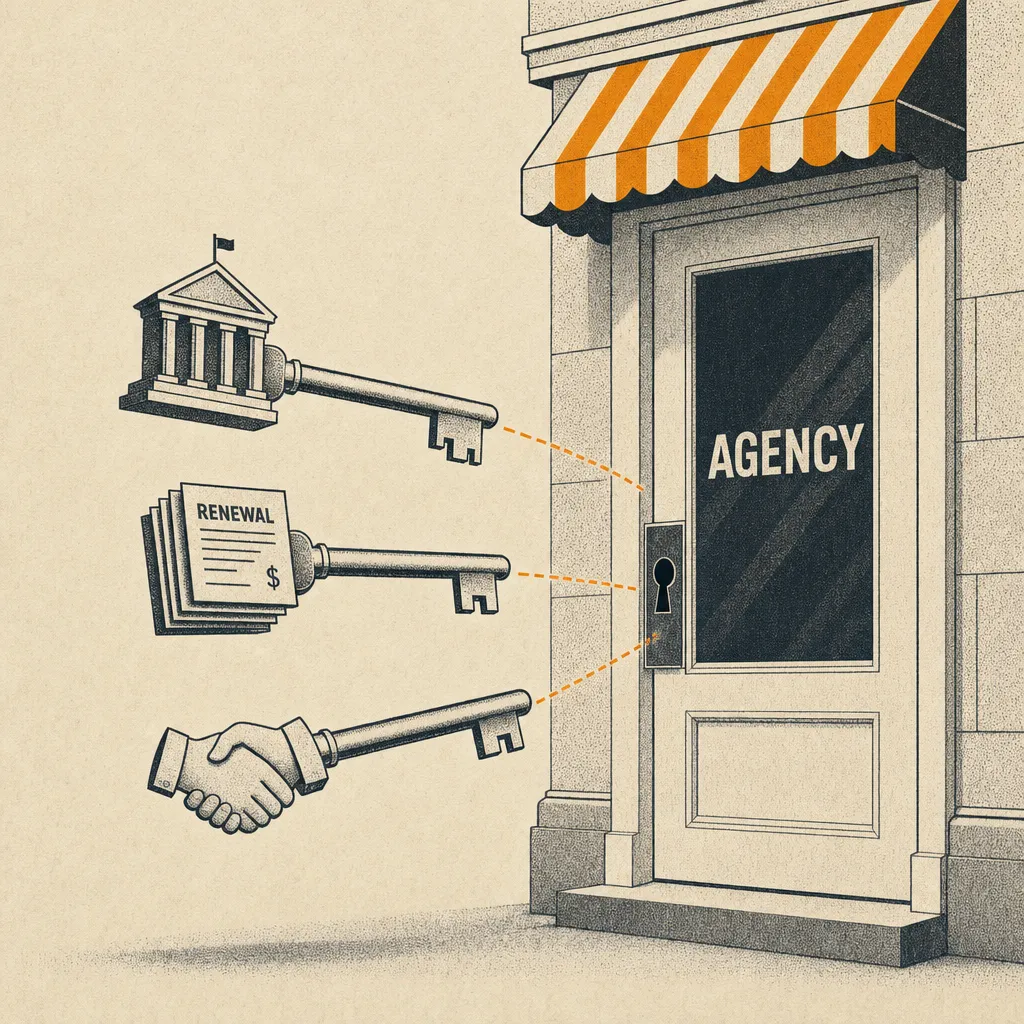
Think of it as three keys for one door. A government-backed bank loan gives you long amortization and a lower rate but wants collateral and paperwork. A specialty lender treats your recurring commissions as the asset and moves faster. A seller note fills whatever gap is left and signals the seller believes the book will hold. Serious buyers rarely use just one. A common stack is a bank or specialty loan for the bulk of the price, a seller note for the last slice, and a modest cash down payment on top.
How does an SBA 7(a) loan work for buying an agency?
The SBA does not lend to you directly. A participating bank makes the loan and the Small Business Administration guarantees a portion, which is why banks will finance a business acquisition that has little hard collateral. Under the SBA 7(a) program, loans of $350,000 or less are handled as 7(a) Small loans and larger deals run through the Standard 7(a) track. Eligibility is broad for a profitable agency: you must be a for-profit business operating in the United States, be unable to get the credit elsewhere on reasonable terms, and show a reasonable ability to repay.
One 2026 change matters for larger buyers. The SBA doubled the cumulative borrower cap across its 7(a) and 504 programs to $10 million, so a buyer running a roll-up strategy can now stack more SBA debt across multiple acquisitions before hitting the ceiling. Live Oak Bank, one of the most active SBA lenders in the agency space, structures 7(a) and conventional loans for acquisitions, partner buyouts, and perpetuation, with an expedited process on smaller requests. The tradeoff with SBA money is time and documentation: personal guarantees, tax returns, the same due diligence any acquisition demands, and a longer close than a specialty lender.
When does a commission-based lender beat an SBA loan?
When the deal is about cash flow, not collateral. A commission-based lender underwrites the renewal income the book throws off rather than the buyer's personal assets. Oak Street Funding, a non-SBA lender that has specialized in the sector since 2003, lends against the value of future renewal commissions, which often supports a larger loan than a hard-collateral test would. It also tends to improve your terms after the first transaction, which matters if you plan to buy more than once. That speed and book-based underwriting is the reason a cash-flow lender wins when you have a strong retention story but a thin personal balance sheet, or when you need to close before a competing buyer does.
Why do sellers agree to carry a note?
Because a seller note is both a bridge and a signal. It bridges the gap between what the bank will lend and the agreed price, and it signals the seller believes the book will retain after they leave. A carried note usually sits behind the senior lender, pays over a few years, and can be tied to a retention target so the seller stays motivated through the handoff. It is a close cousin of the earnout structures buyers and sellers use to bridge a price gap. For a seller like an owner planning a fundable exit, a note can also smooth the tax timing of the sale. Treat the tax treatment as a question for a CPA, not a blog post, but understand the lever exists.
Which financing path fits your deal?
Use this to match structure to situation. The figures below are directional ranges compiled from the lender sources cited above, not quotes, and every real term is deal-specific and hinges on what the book is actually worth.
| Path | Underwrites | Typical use of seller financing | Speed | Best for |
|---|---|---|---|---|
| SBA 7(a) bank loan | Business cash flow plus personal guarantee | Often required as a subordinate slice | Slower, document-heavy | First-time buyers with limited collateral |
| Commission-based lender | Value of renewal commissions | Optional | Faster | Cash-flow deals, repeat acquirers |
| Seller note | Seller's confidence in retention | Is the seller financing | Fast, negotiated | Closing the last gap and aligning both sides |
The point of the table is not the numbers. It is the underwriting basis in column two. That is what actually decides which lender says yes to your specific deal.
What would we actually do?
Here is the operator's take. Do not shop for the lowest rate first. Model your post-close cash flow, subtract realistic debt service, and see what is left to run the agency and pay yourself. Then pick the structure that survives a bad retention quarter and carries you through the first year after the purchase. For a first acquisition with a clean book and thin collateral, an SBA 7(a) loan through a lender like Live Oak plus a small seller note is the boring, durable answer. If you are on your second or third deal and the book cash-flows, a commission-based lender like Oak Street will move faster and reward the relationship. Whatever you sign, make the seller keep skin in the game with a retention-tied note. A seller who carries paper is a seller who wants your renewals to hold.
Sources
- U.S. Small Business Administration, 7(a) loans
- U.S. Small Business Administration, cumulative 7(a) and 504 limit raised to $10 million
- Oak Street Funding, insurance acquisition financing
- Live Oak Bank, insurance agent financing
Value Your Agency
Get Started →Related reading
Written by licensed property and casualty agency operators on the Insurance Dudes M&A Desk. Insurance Agency Trader is US-based, serving independent and captive agency owners across the United States.
Editorial process: every post is reviewed against our published valuation math and current market data before it ships, and updated when the numbers move. Corrections: email craig@insuranceagencytrader.com and we will fix errors promptly.