The Earnout Trap: Why Your 7x Offer Pays Like a 4x
Most insurance agency earnout structures look like 7x EBITDA on the LOI and pay out like 4x in practice. Here is the math buyers do not show you.
Most insurance agency earnout structures pay out significantly less than the headline EBITDA multiple. Hurdle rates, cliff thresholds, and growth assumptions built into the deal stack against sellers. Understanding how buyers construct these formulas before signing is the difference between walking away whole and working unpaid.
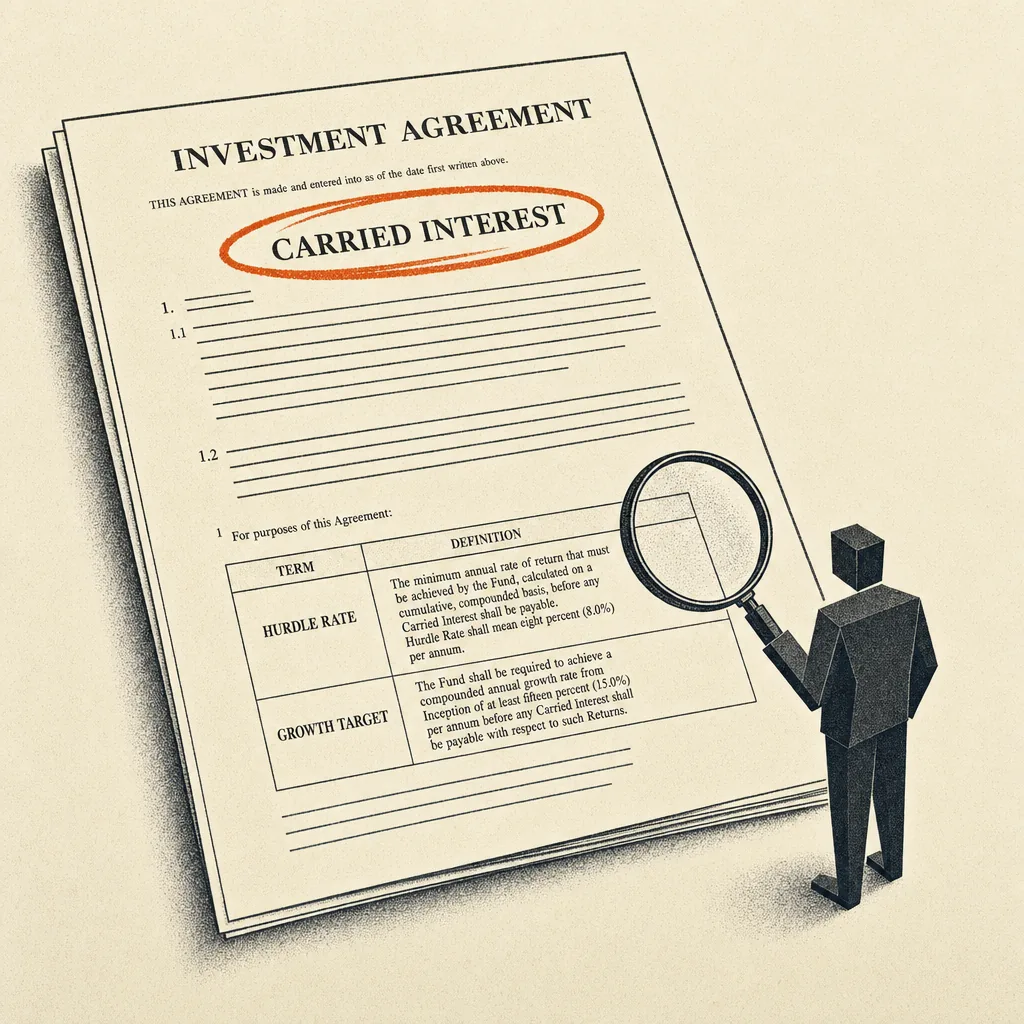
The agency owner who reads only the headline multiple walks into a transaction where a large portion of the stated value is contingent on future performance, locked behind targets that require post-close growth the seller may never control.
What does an earnout actually guarantee?
Nothing, by definition. An earnout is a contingent payment: money paid later, if the business hits future performance thresholds. As Farrell Fritz explains in their M&A transaction guide, if the deal is priced at $32,000,000 with $5,000,000 in earnout, the seller has accepted a $27,000,000 offer with an option to reach $32,000,000.
That distinction matters because the two numbers often live in different universes of probability. The guaranteed cash closes at signing. The earnout requires the acquired business to grow, often at rates the seller never achieved before, while the buyer now controls the budget, the staffing, and the integration decisions.
Per INS Capital Group's analysis of earnout mechanics, growth assumptions built into earnouts are often aggressive: sometimes double or triple what the seller achieved historically. The seller, already exhausted from the transaction process, is then asked to drive that growth in a business where operating authority has already transferred to the buyer.
Why does a 7x offer pay out like 4x in practice?
The gap lives in three places: the hurdle rate, the cliff structure, and the stock-versus-cash split.
Hurdle rate. Before any earnout pays out, the agency must hit a minimum performance threshold. Per INS Capital Group, if the hurdle requires 10% annual growth and the agency achieves 7%, the seller may receive nothing, even though the business grew. The hurdle does not grade on a curve.
Cliff structure. Buyers strongly prefer all-or-nothing earnout gates. Per Farrell Fritz, if the EBITDA threshold is $1,000,000 and actual EBITDA lands at $900,000, the earnout payment is zero. Sellers prefer a sliding scale, but buyers resist it. When a sliding scale does get negotiated, the earnout payment percentage is typically lower than the achievement percentage: hitting 90% of the threshold might earn only 70% of the maximum earnout payment.
Cash versus stock split. In PE-backed deals, a significant share of the earnout often comes in the form of equity in the acquiring firm, not cash. Agency Brokerage analyzed one actual LOI where nearly 60% of the stated value was tied to stock in a firm that had not provided shareholder liquidity in over five years. Stock in a private platform is not cash. It is a deferred, illiquid position in a firm whose exit timeline the seller does not control.
The math adds up fast. A 7x EBITDA headline might decompose into: 4x in guaranteed cash, 2x in illiquid stock (vesting over three years), and 1x in earnout (cliff-gated, requiring 15% annual revenue growth post-close). The seller who needs all three components to make the deal work is the seller most likely to feel shortchanged at the two-year mark.
How do buyers build growth assumptions sellers cannot hit?
The requirement to grow at rates the business never achieved is not an accident. Agency Brokerage, analyzing actual LOI structures, documented a case where the seller had to grow at a 50% compound annual growth rate just to earn the full stated multiple. If the agency had achieved that growth, it would have been worth more than the buyer paid.
This is the structural asymmetry of earnout-heavy deals. The buyer's risk is capped: pay the guaranteed cash and wait to see if the contingent portion gets earned. The seller's risk is open-ended: stay involved post-close, hit aggressive targets in a business where decisions have already passed to the buyer, and find out years later whether the headline number was real.
Sica Fletcher points out a related distortion: a 4x revenue multiple might actually deliver more cash to the seller than a 6x EBITDA multiple, depending on the agency's cost structure and how the buyer calculates EBITDA in the earnout period. The multiple is not the deal. The calculation behind it is. For a closer look at how revenue-based and EBITDA-based multiples differ in practice, see the comparison of valuation methods.
What does the 2025 M&A market mean for earnout pressure?
Deal volume in insurance agency M&A has cooled from its 2021 peak. Per OPTIS Partners' Year-End 2024 report, as cited by Agency Equity, there were 750 total transactions in 2024, down from 1,108 in 2021, the busiest year on record, and 15% below the previous five-year average. Fewer deals and more capital chasing quality books gives buyers room to push complex structures on motivated sellers.
At the same time, MarshBerry reports that agency valuations currently sit almost 19% above the 10-year index, with private capital-backed buyers continuing to dominate deal activity. High headline multiples are the buyer's tool to attract sellers in a competitive market. The earnout structure is how buyers protect themselves when the price they are paying is above historical norms.
MarshBerry specifically identifies mid-market agencies, those with $500,000 to $10,000,000 in revenue, as facing the most strategic pressure to consolidate. These sellers have fewer alternatives, less M&A experience, and more urgency than large brokerages. That combination produces favorable conditions for buyers to back-load the purchase price into contingent payments.
The 2025 Reagan Consulting and Big "I" Best Practices Study places agency EBITDA margins at 26.1%, historically high and built on years of strong organic growth. A high-margin agency acquired at peak market pricing, with aggressive earnout targets, is a calculated buyer bet that organic growth will slow post-close, making the contingent tranche harder to reach.
What should you verify before signing an earnout LOI?
Three questions that change the math before anything gets signed:
One: does the guaranteed cash work by itself? Per INS Capital Group, if the guaranteed portion alone does not make the deal worthwhile, the earnout is carrying too much of the valuation. That is a structural warning, not a feature.
Two: is the earnout cliff-structured or sliding scale? If the gate is cliff-structured (zero payment below threshold), any growth miss wipes the contingent portion entirely. Buyers prefer the cliff; sellers should push for a sliding scale and understand which they agreed to before the LOI is signed.
Three: how much of the earnout pays in cash versus stock? Stock in a private, PE-backed platform is an illiquid position in a firm whose exit timeline is not yours to control.
For more on the mechanics of deal terms, see how to structure earnouts to protect yourself and how PE buyers compare to independent acquirers.
What does the earnout structure signal about the real offer?
The earnout number in the LOI headline is a marketing figure, not a transaction price. Agency Brokerage documented one actual offer where less than 20% of the stated value was guaranteed cash. The rest required the seller to grow at rates that, if achieved, would have made the agency worth more than the buyer paid. That is not a valuation. That is a buyer protecting capital while dressing the offer in seller-friendly language.
The independent agency owner reviewing an earnout LOI without an advisor who can break down the hurdle rate, the cliff structure, and the stock-versus-cash split is the person carrying the most exposure in the deal. A high guaranteed cash price at a fair multiple is a completed transaction. A low guaranteed cash price with a spectacular contingent upside is a job offer with a commission plan the buyer wrote.
Frequently Asked Questions
How much of an earnout deal is usually guaranteed cash?
There is no fixed ratio, and that is the point. Agency Brokerage documented one actual offer where less than 20 percent of the stated value was guaranteed cash, with the rest tied to aggressive growth targets and illiquid stock. Treat the guaranteed payment as the real offer and the contingent portion as an option that may never pay.
Can you negotiate a sliding scale instead of a cliff earnout?
Sometimes, but buyers resist it. Buyers strongly prefer all-or-nothing cliff gates, where missing the threshold by any margin pays zero. Sellers should push for a sliding scale and, at minimum, confirm in writing which structure they agreed to before the LOI is signed.
Is rollover stock in a PE platform the same as cash?
No. Stock in a private, PE-backed platform is an illiquid position in a firm whose exit timeline you do not control. It can be worth more than cash if the platform exits well, or far less if it recapitalizes at a lower valuation or never provides liquidity.
What single question reveals whether an earnout offer is fair?
Ask whether the guaranteed cash alone makes the deal worthwhile. If the guaranteed portion by itself does not justify the sale, the earnout is carrying too much of the valuation, and that is a structural warning rather than a feature.
Sources
- Earnouts in Acquisitions: How They Work and What Sellers Need to Know, INS Capital Group
- The Earnout in Sale Transactions, Farrell Fritz
- The Tantalizing Trap of "30x EBITDA" Offers, Agency Brokerage
- Common Types of Insurance Agency Sellers, Sica Fletcher
- How Insurance Agency M&A Market Performed in 2024, Agency Equity (citing OPTIS Partners Year-End 2024 Report)
- Navigating the Future: Key Trends in the Insurance Brokerage M&A Market, MarshBerry
- Big I and Reagan Consulting Release 2025 Best Practices Study, Independent Agent
Calculate Your Agency Value
Get Started →Written by licensed property and casualty agency operators on the Insurance Dudes M&A Desk. Insurance Agency Trader is US-based, serving independent and captive agency owners across the United States.
Editorial process: every post is reviewed against our published valuation math and current market data before it ships, and updated when the numbers move. Corrections: email craig@insuranceagencytrader.com and we will fix errors promptly.