Working Capital at Close for Insurance Agency Buyers
Working capital at close is the agency purchase price adjustment that quietly moves real money after the deal signs, and buyers who miss the peg pay up.
Working capital at close is a post-closing price adjustment, not a headline multiple. The buyer and seller agree on a target peg, then true-up the actual net working capital delivered against it, which is why agency bill receivables and carrier payables matter most.
The number that matters is not on the front page of the LOI.
Insurance Dudes M&A Desk
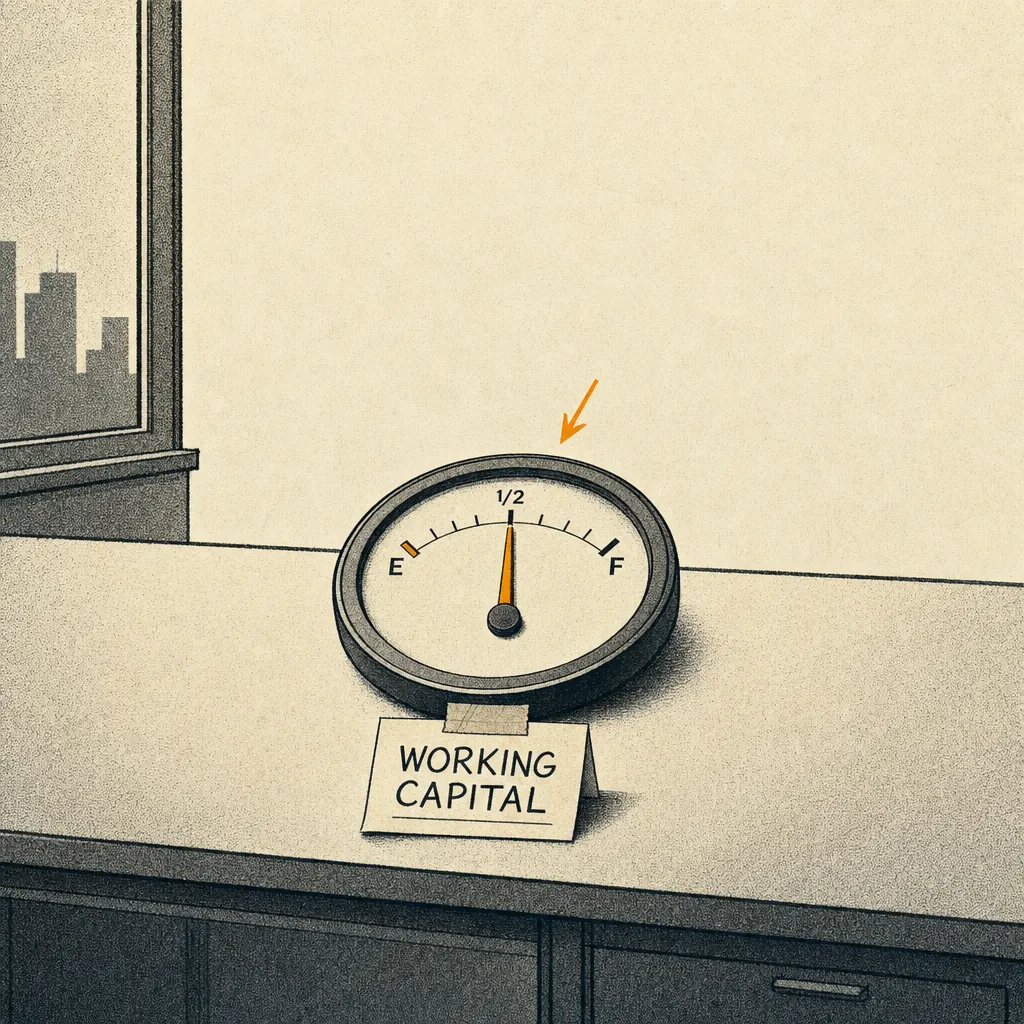
Working capital at close is the purchase price adjustment that quietly moves real money after the deal is already signed, and for an insurance agency buyer it lives almost entirely in agency bill receivables and carrier payables. Private M&A deals are priced cash-free and debt-free, so the seller walks away with the cash and you walk in holding whatever short-term assets and liabilities are left to run the book on day one.
Key Takeaways
- 85 percent of private M&A deals carry a purchase price adjustment, and working capital is the most common at 91 percent.
- The peg is the negotiated target level of working capital the seller must deliver, not a valuation multiple.
- A pro-buyer negative adjustment lands in 55 percent of deals, but only 35 percent close pro-seller.
- In an agency, the numbers that matter are agency bill receivables, direct bill commissions in transit, and carrier payables.
- The true-up happens 60 to 90 days after close, so the number at sign is not the number you finally pay.
What is net working capital in an insurance agency purchase?
Net working capital is current assets minus current liabilities, full stop, and BDO frames the whole exercise as one of the three core diligence workstreams alongside quality of earnings and a debt-like items analysis. In a normal manufacturing deal that means inventory, receivables, and payables. In an agency, the balance sheet is thinner and the language is different, so the components deserve a harder look.
Insurance Journal explains the mechanics that actually drive an agency close. Direct bill commissions are simple: the carrier pays the agency monthly. Agency bill is where the balance sheet shows up, because when commission is accrued it lands as income, a client receivable on the asset side, and a carrier payable on the liability side. That pairing, receivable against payable, is your working capital. It is also the line item a seller can quietly drain if the peg is not defined.
How does the working capital peg get set?
The peg is the negotiated target level of operating net working capital the seller must deliver at closing, and a shortfall usually reduces the purchase price while a surplus may increase it, subject to the agreement's collar or threshold. The key word is negotiated, because the two sides want opposite things.
BDO notes the buyer and the seller have directly opposing interests when the peg is set. The buyer wants a full level of working capital so the agency can pay its carriers and service the book without a capital call; the seller wants to sweep the maximum out before close. The peg is usually built from a trailing average of historical working capital, adjusted for one-time items and seasonality, and it belongs in the LOI, not in the closing email.
What gets counted and what gets excluded at close?
Working capital is current assets excluding cash, minus current liabilities excluding debt. Cash is excluded because the deal is cash-free, and debt is excluded because the seller pays it out of proceeds. Lincoln International frames the peg as the mechanism that ensures the buyer receives, and the seller delivers, a normal level of working capital, not the cash balance or a multiple.
In agency terms, the assets that count are agency bill client receivables and direct bill commissions earned but not yet paid out by the carrier. The liabilities that count are carrier payables and any accrued producer commission owed but not yet settled. The trap for a buyer is the asset that does not collect, a receivable owed by a client whose policy is about to lapse, because it sits in the working capital figure at face value until someone tries to collect it.
How does the true-up actually work?
The adjustment is a post-closing calculation, not a sign-closing number. PwC frames the true-up as the difference between the seller's estimated closing statement, prepared before close, and the final balances on cash, indebtedness, and working capital that become known once the books are closed, which in an agency is the agency bill book doing exactly what books do. The seller prepares an estimated closing balance sheet before close, then the final number is reconciled after.
Whiteford Taylor gives the timing you should plan for: a closing estimate a few days before close, then a final true-up 60 to 90 days after. When the delivered working capital lands above the peg, the buyer pays up; when it lands below, the price comes down. The direction is not neutral in practice, and Whiteford's data point is the one worth writing down: a pro-buyer negative adjustment shows up in 55 percent of deals, while a pro-seller positive adjustment appears in only 35 percent.
What should a buyer watch for at close?
The number that matters is not on the front page of the LOI. Stout cites the American Bar Association's Deal Points Study showing 85 percent of private deals carry a purchase price adjustment, with working capital as the most common at 91 percent. That means this is not an edge case to handle if it comes up; it is the standard shape of a deal, and you either define it early or you fund someone else's definition later.
For an agency buyer the diligence is concrete. Big I's Al Diamond, writing on agency acquisitions, stresses that the data needed to buy a book goes well beyond the financials, and that retention potential, carrier stability, and book profitability all sit behind the offer you make. Confirm the peg is built from the same accounting methodology used to value the book, so the close does not reprice the deal through a backdoor. Confirm trust account balances reconcile before close, because state fiduciary rules govern premium trust funds and a delayed reconciliation becomes your problem on day one, as Insurance Journal makes clear. And pin the definition of agency bill receivable, because a receivable that does not collect is not working capital, it is a haircut.
Frequently Asked Questions
What is a working capital peg?
A working capital peg is the negotiated target level of net working capital a seller must deliver at close, and the final adjustment is calculated as closing net working capital minus that peg.
Does working capital change the purchase price?
It does not usually change the headline enterprise value, but the true-up against the peg can materially change the cash the buyer ultimately pays or the seller ultimately receives.
What is excluded from net working capital at close?
Cash is excluded because the deal is cash-free, and debt is excluded because the seller pays it from proceeds, leaving current operating assets minus current operating liabilities.
When does the working capital true-up happen?
The final reconciliation typically happens 60 to 90 days after close, following a closing estimate prepared a few days before the transaction closes.
What we'd actually do at close?
Buyers spend the whole diligence period arguing about the multiple and then sign a working capital peg they never read, and that is backwards. The Whiteford figure, a negative buyer-favorable adjustment in 55 percent of deals against 35 percent seller-favorable, tells you the peg usually protects the person who wrote it, not the person who showed up at close. Pin the peg in the LOI, tie it to the same accounting the valuation used, and walk agency bill receivables line by line before you sign, because the gas in the tank is what lets you drive the book on day one, and you are the one driving.
Sources
- Post-Closing Working Capital Adjustments (Stout)
- Accounting Essentials for Insurance Agency Owners (Insurance Journal)
- Net Working Capital & Purchase Price Adjustments (Whiteford Taylor)
- Net Working Capital Is Vital In M&A (BDO)
- Agency Acquisitions and Due Diligence (Independent Agent)
- Bridging the Net Working Capital Gap (Lincoln International)
- Better Negotiations of Post-Closing Price Adjustments (PwC)
Related Reading
Value Your Agency
Get Started →Written by licensed property and casualty agency operators on the Insurance Dudes M&A Desk. Insurance Agency Trader is US-based, serving independent and captive agency owners across the United States.
Editorial process: every post is reviewed against our published valuation math and current market data before it ships, and updated when the numbers move. Corrections: email craig@insuranceagencytrader.com and we will fix errors promptly.