Why Farmers Agents Are Leaving in 2026, and Where They Go
Commission cuts, impossible bonus structures, and rates that haven't been competitive since 2008 - why P&C agents at Farmers are walking away from captive.
Farmers agents are leaving in coordinated waves because the model stopped working: 20 percent commission cuts, bonus thresholds rebuilt to be unhittable, rates uncompetitive since 2008, and call centers that opened and closed without warning. Tenure and contract value no longer compensate for the trend.
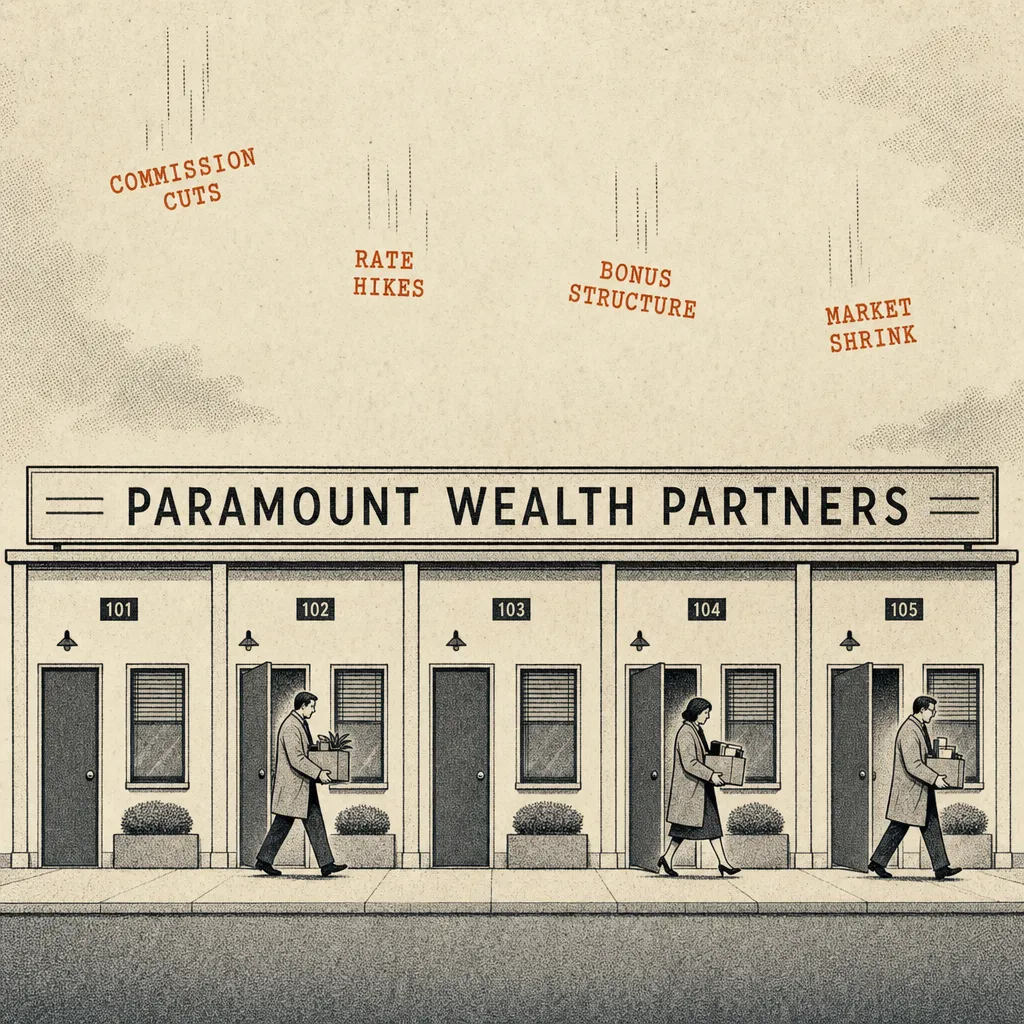
Agents in online forums and industry discussions have described mass departures from individual Farmers districts, not gradual attrition, but coordinated exits following structural changes to compensation. If you're a Farmers agent in 2026, understanding what's driving these departures is worth your time.
How Did the Farmers Commission Cuts Change the Equation for Agents?
When Farmers slashed P&C commissions by more than 20 percent, they didn't just reduce income. They fundamentally changed the economics of running a Farmers agency. Farmers has been cutting base commission rates "for most products" while restructuring its agent distribution model. Agent reviews on Indeed describe "commissions reduced to the point of theft." The agents who'd built their business models around the old commission structure suddenly had 20 percent less revenue and the same fixed costs.
Agents also report rising marketing costs during the same period. So you're earning significantly less per policy while spending more to acquire each customer. That math breaks for everyone except the largest agencies with the lowest per-unit costs.
The agents who quit en masse weren't dramatic. They were just honest about arithmetic.
Why Can't Farmers Agents Actually Hit the Quarterly Bonus Structure?
Agents describe the Farmers bonus structure as requiring near-perfect cross-sell metrics across multiple product lines (home, auto, life, and umbrella) on a quarterly basis. Agents report that missing targets with even a single client can jeopardize the entire quarterly bonus.
The practical challenge: renters who don't own homes, young clients who don't need umbrella coverage, and clients with health conditions that make life products unaffordable all count against your metrics.
Agents we've spoken with describe the structure as designed to look achievable in a district meeting but nearly impossible to sustain across a real book of business.
Why Have Farmers Rates Not Been Competitive in Nearly Two Decades?
Multiple veteran Farmers agents have told me the same thing: Farmers hasn't been consistently competitive in most markets since the late 2000s. Agents report that Farmers auto rates are significantly higher than many competitors in most markets. Home insurance isn't much better in most states, according to agent discussions on Insurance Forums.
When your rates aren't competitive, your close ratio suffers. One longtime Farmers agent admitted his auto close ratio never exceeded 10 percent. When nine out of ten prospects walk away because you can't compete on price, you're not running a sales operation. You're running a rejection factory.
The math is brutal. If you're quoting twenty households and closing two, that's eight hours of work for two policies. An independent agent with fifteen carriers closes seven or eight from the same twenty quotes. Same market, same effort, dramatically different outcome. While no single industry-wide study publishes captive vs. independent close ratios, these figures are consistently reported across independent agency networks like SIAA and Smart Choice, and corroborated by agents who have made the transition, with the differential attributed to single-carrier pricing constraints versus multi-carrier market access.
What Did the Farmers Call-Center Episode Tell Agents About the Carrier?
Farmers opened call centers to sell directly to consumers, competing with their own field agents. Then they closed the call centers overnight with no warning to the recently recruited agents staffing them. Just gone. No severance from the decision, no transition plan, no acknowledgment.
This pattern tells you everything about how the company views its agent channel: useful when convenient, expendable when the strategy shifts. If Farmers will close a call center overnight without warning, what makes you think your agency agreement is more secure?
What Do the Farmers Agent Churn Numbers Actually Show?
Agent tenure data suggests significant churn within the Farmers system. Industry observers and agent associations report that a substantial portion of Farmers agents don't make it past year three. Farmers has also been restructuring its operations, including rebuilding its East region under a district manager model, moves that have further destabilized the agent channel.
This isn't a reflection of agent quality. I've met brilliant insurance professionals who failed at Farmers, not because they couldn't sell, but because the model wouldn't let them compete. When your carrier's rates are 40 percent above market and your close ratio is 10 percent, talent is not the variable that determines success.
What Does the Independent Side Actually Look Like for a Departing Farmers Agent?
A former Farmers agent who went independent reported selling more in one year than he had in five years as a captive. His explanation was simple: he went from one carrier with uncompetitive rates to twenty carriers with the right rate for every risk profile.
Another agent who made the transition said his close ratio went from roughly 10 percent to over 35 percent. Same skills, same market, same work ethic. The only thing that changed was the number of carrier options he could offer.
The agents who leave Farmers don't stop being insurance agents. They stop being limited to one carrier's pricing. And when that limitation lifts, the business they always knew they could build starts showing up in their revenue numbers.
Why Is the Farmers Contract Value Now a Trap Instead of a Cushion?
Here's what keeps agents from leaving even when the math doesn't work: contract value. Your nest egg. The accumulated value that Farmers will pay out when you leave.
But here's what most agents don't think about: your contract value is directly tied to your commission structure. When commissions got cut by 20 percent, agents report that contract value has decreased alongside commission cuts. One professional who works with transitioning agents described agents discovering they'll receive significantly less than expected when they leave.
The contract value feels like golden handcuffs. But if the handcuffs are getting lighter every year as commission cuts erode their value, at what point do you realize you're staying for something that's shrinking?
What Question Is Every Farmers Agent Worth Asking Themselves?
If you're a Farmers agent reading this, you already know most of what I've described. You've felt the commission cuts in your bank account. You've watched the bonus structure punish you for having a normal book of business. You've quoted prospects and known, before you even showed them the number, that you were going to lose.
The question agents are asking isn't whether Farmers is struggling. It's how these structural factors affect their long-term career planning.
The agents who left made a calculation based on the factors described above. Every agent's situation, including contract terms, financial position, and local market conditions, is different. Consult your agent agreement and an attorney before making any transition decisions. For the practical roadmap, see our Farmers agent exit guide and the broader ten-year captive-to-independent transition framework.
"The commission cuts at Farmers are not isolated adjustments. They are part of a pattern that agents have been documenting for years. When your base pay is cut and your bonus is structured to be nearly unreachable, the agent channel stops being a business opportunity and starts being a subsidy model for the carrier." Agent review, Indeed / Farmers Insurance Agency Owner (composite of verified reviews)
Frequently Asked Questions
Q: Did Farmers really cut commissions by 20 percent?
A: Yes. Farmers reduced base commission rates for most products by more than 20 percent as part of its 2023 agent distribution restructuring. The cuts hit guaranteed base pay and pushed more comp into difficult-to-hit bonus tiers.
Q: How is my Farmers contract value calculated?
A: Contract value is a formula tied to your commission history and production, not market value. Because commissions dropped after restructuring, the formula inputs dropped too. Agents on forums routinely report payouts below what they had projected before the cuts.
Q: Is my captive carrier next?
A: No one can predict specific carrier announcements, but the industry trend is clearly toward expanded independent distribution. Nationwide fully transitioned, and major captives have been quietly testing hybrid distribution. Planning your own exit timeline beats reacting to a press release.
Q: Should I join SIAA or Smart Choice?
A: Most departing Farmers agents land in a network (SIAA, Smart Choice, PGI, Keystone) to solve the carrier-appointment chicken-and-egg problem on day one. Direct appointments typically come later as premium volume grows. See how to go independent after ten years captive for the typical ramp.
Q: What's the worst that can happen if I leave my captive carrier?
A: The realistic downside is a 12-18 month income dip during the ramp, plus exposure to non-solicitation enforcement if you contact former clients during the restricted window. The catastrophic scenarios agents worry about on forums are uncommon when the exit is planned with counsel, which is exactly why professional review matters.
Sources & References
- The Insurer, Farmers Commission Rate Cuts:
- Indeed, Farmers Insurance Agency Owner Reviews: https://www.indeed.com/cmp/Farmers-Insurance-Group/reviews?fjobtitle=Agency+Owner&ftopic=paybenefits
- Live Insurance News, Farmers Insurance Rebuilding: https://www.liveinsurancenews.com/farmers-insurance-is-rebuilding/8570566/
- UFAA, Farmers Agent Industry News: https://ufaa.com/Industry-News
- Insurance Forums, Farmers Commission and Bonus Discussion: https://www.insurance-forums.com/community/threads/farmers-insurance-to-cut-commissions-and-increase-bonus.87872/
- SIAA (Strategic Insurance Agency Alliance): https://www.siaa.com
- Smart Choice Agents: https://www.smartchoiceagents.com
Written by licensed property and casualty agency operators on the Insurance Dudes M&A Desk. Insurance Agency Trader is US-based, serving independent and captive agency owners across the United States.
Editorial process: every post is reviewed against our published valuation math and current market data before it ships, and updated when the numbers move. Corrections: email craig@insuranceagencytrader.com and we will fix errors promptly.