How to Build a Referral Network as an Independent Agent
Independent agents who grow fastest do not buy leads. They build referral networks that feed clients in at zero acquisition cost, by design and discipline.
Independent agents who grow fastest do not buy leads. They build a ten-partner referral network of mortgage brokers, real estate agents, CPAs, attorneys, and contractors. The value exchange runs both ways. A mature referral network produces 30 to 50 percent of new business at zero acquisition cost.
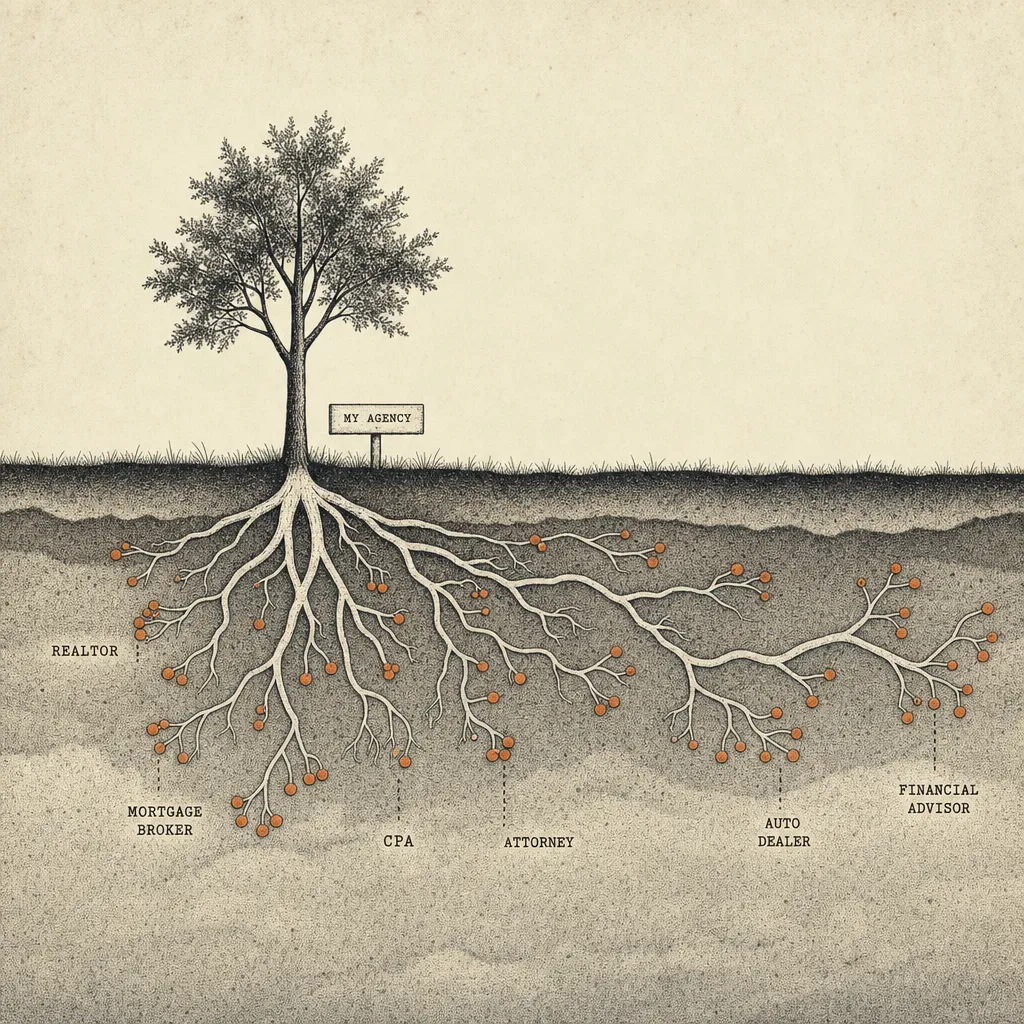
The agents spending thousands on internet leads are working harder than the agents getting phone calls from referral partners who say "I've got someone who needs your help." The lead-buying agent is competing with multiple other agents who bought the same lead. The referral agent is the only call the client is making.
Building a referral network takes time. But once it's running, it tends to be among the most cost-effective lead sources available to independent agents, and the math compares favorably to the ranges we outline in our insurance agency marketing budget guide.
Who Are the Core Referral Partners for an Independent Agency?
The professionals who interact with your ideal clients before they need insurance are your target partners. Real estate agents are the most obvious. Every home purchase triggers a homeowners insurance need. Mortgage brokers are close behind, often requiring proof of insurance before closing.
CPAs and financial advisors interact with clients during tax and planning conversations where insurance gaps become visible. Attorneys handle divorces, business formations, and estate planning: all trigger events for insurance changes.
Auto dealers, property managers, and HR consultants round out the list for personal and commercial lines respectively.
What Does the Value Exchange Actually Look Like Both Ways?
A referral relationship isn't charity. It's a trade. You send business to your partners, and they send business to you. If you're only receiving and never giving, the relationship dies.
Make it easy for partners to refer to you. Give them your direct line. Respond to their referrals within an hour. This is much easier when you've built out the service infrastructure described in our post on hiring your first employee. Keep them updated on the client's status so they look good to their own client. Thank them (in writing, with a handwritten note or a small gift) for every referral that turns into a policy.
Equally important: send them referrals back. When a client mentions they need a CPA, refer your CPA partner. When they're buying a house, refer your real estate partner. The reciprocal flow is what makes the relationship sustainable.
Why Does Ten Partners Mark the Mature Referral Network?
You don't need fifty referral partners. You need ten great ones: professionals who are active in your market, see a steady stream of clients, and are willing to build a reciprocal relationship.
In year one, identify twenty potential partners and build relationships with all of them. By year's end, ten will emerge as active referral sources. The other ten will be pleasant conversations that didn't convert. That's normal.
Maintain the ten active partners through monthly touchpoints: a coffee, a quick phone call, a shared article, an invitation to a community event. These small investments maintain the relationship and keep you top of mind when their client needs insurance.
How Does Community Involvement Feed the Network?
The referral network extends beyond professional partners. Community involvement (chamber of commerce, service clubs, youth sports sponsorships, local charity boards) puts you in rooms with people who make decisions about insurance.
This isn't a quick-return marketing channel. It takes six to twelve months before community involvement generates referral activity. But the referrals that come from genuine community relationships are among the stickiest clients you'll ever write, because the relationship predates the transaction.
What Does the Referral-Network Math Look Like Compared to Paid Leads?
As an illustrative projection, a good referral partner might send you a few clients per month. With ten active partners, that could translate to a meaningful volume of warm leads. Warm referrals generally close at significantly higher rates than purchased leads. Agents report referral close rates well above those for shared internet leads.
By comparison, industry estimates suggest purchased internet leads cost $15 to $30 per lead with close rates in the single digits due to shared-lead competition. Referrals cost you time and relationship maintenance. The exact numbers vary by market and agent, but agency networks consistently report that warm referral conversion rates significantly outperform purchased internet leads.
The economics aren't close. The referral model costs less, converts better, and produces clients who are more loyal because they came through a trusted recommendation rather than a Google search. Combined with the close ratio advantage of being independent, referral-sourced leads become disproportionately valuable to the agency.
Build the network. Feed the network. Let the network feed you.
Frequently Asked Questions
Q: Do referral programs actually work in insurance?
A: Warm referrals consistently outperform purchased internet leads on both close rate and retention. Independent agent networks routinely report that referral close rates significantly exceed the single-digit close rates on shared internet leads.
Q: How do I build a referral network from scratch?
A: Target real estate agents, mortgage brokers, CPAs, financial advisors, and attorneys. Each touches clients at moments when insurance decisions come up. Start by building relationships with about twenty professionals and let the ten strongest emerge over the first year.
Q: Is lead buying worth it compared to referrals?
A: Purchased internet leads typically run $15 to $30 per lead with single-digit close rates because they're shared across multiple agents. Referrals cost time rather than money and close at multiples of that rate. Most agents use purchased leads to fill early pipeline gaps, not as the long-term strategy.
Q: Do I have to pay for insurance referrals?
A: In most states, paying non-licensed parties for referrals is restricted or outright prohibited. Reciprocal business and non-cash courtesies are the typical currency. Check your state's department of insurance rules before any formal referral-fee arrangement.
Q: How long before community involvement starts producing referrals?
A: Most agents report six to twelve months before community activities produce meaningful flow. The relationships that form through that involvement tend to be very sticky once they do start producing, which is why patience matters here.
This post is informational only and does not constitute professional, legal, or financial advice. Consult qualified professionals before making business decisions.
Sources & References
- MarshBerry: How to Think About Value
- SBA: How Long Do Small Businesses Last
Written by licensed property and casualty agency operators on the Insurance Dudes M&A Desk. Insurance Agency Trader is US-based, serving independent and captive agency owners across the United States.
Editorial process: every post is reviewed against our published valuation math and current market data before it ships, and updated when the numbers move. Corrections: email craig@insuranceagencytrader.com and we will fix errors promptly.